





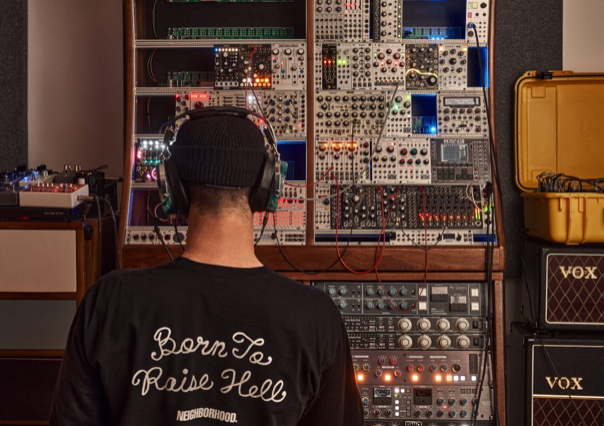
Inside Ten87 Studios: What It’s Really Like to Have a Long-Term Studio Space in Tottenham
Finding studio space in London isn’t difficult. Finding a place where you actually want to spend years of your working life, where the building around you makes your music better, where the people next door become your collaborators, where you feel like you belong, is much harder.
Ten87 Studios has been that place for over 150 artists, producers and engineers since 2014. Three sites across Tottenham. Over 60 professional studios. A community that has produced releases, long-term creative partnerships, and careers that are still developing years after the first session.
This is what it actually looks like from the inside.
Three sites, one community
Ten87 Studios operates across three locations in Tottenham, each with its own character.
Gaunson House is where it started – six studios that established the model everything else has been built around. It’s the smallest site and, for many members, the most intimate.
Markfield Road is the flagship complex: over 30 high-spec long-term studios, onsite venue, and home to The Club and Studio B – the day hire spaces that bring a constant stream of visiting artists into the community alongside the permanent membership.
High Cross is the newest site, housing ten studios built to our most advanced acoustic specification. Located minutes from Seven Sisters and Tottenham Hale stations, it’s the quietest and most technically refined of the three.
Members can move between sites as their needs change. Several have held studios at more than one location over their time here.
What members say
The most honest account of what Ten87 is like comes from the people who work here.
“I’ve moved around a few of the studios over my time at Ten87 and there have always been new advantages and exciting elements to each studio. I’ve used The Club both to record and to host events with a joint organisation, the Trans+ Creative Collective. Ten87 have always been a massive advocate for the projects that I’ve been working on and the community is a huge support for me. I love being a resident at Ten87.”
“Since becoming a part of the Ten87 crew I’ve become the most productive I’ve ever been. The rooms are just perfect and the vibe is everything you could ask for. Thanks for making these spaces available to London music. You’ve created community.”
“It’s so nice to feel like a part of a community again and be inspired by all the amazing people creating around us. Thanks so much to the team here for making it such a great place to be.”
“Ten87 is a beautiful studio complex with an incredible family of producers, artists, sound designers and engineers who never cease to inspire me, there really is a great community spirit here. I can’t wax lyrical enough about the amazing team behind Ten87, they really go above and beyond and I’m so grateful for their support.”
“I’ve had a few studios at Ten87 and it’s been my musical home for a number of years now. The strong community element is an important part of why I’m here.”
The word that comes up most often, in conversation and in writing, is community. Not facilities. Not price. Not location. Community.
What a long-term studio gives you that day hire doesn’t
Day hire is how most members first encounter Ten87. A session in The Club or Studio B, a day of focused work, an introduction to what the building feels like when it’s full of people making music.
Long-term hire is something different.
Your setup stays exactly as you left it. No repacking and rebuilding every session. No compromising on how a room is set up because the next person needs it different. Your studio is yours – configured for your workflow, your gear, your way of working.
You work on your own terms. All three sites operate on 24-hour access. Creativity doesn’t follow office hours, and the building doesn’t either. Members who work through the night, start at dawn, or keep unusual hours aren’t the exception – they’re part of how Ten87 functions.
Clients come to you. Having a permanent professional space changes the nature of client relationships. Instead of booking time in someone else’s studio, you’re welcoming people into your own environment – which is a different kind of conversation, and often a more productive one.
The network compounds. The introductions that happen in the first weeks of a long-term membership are just the beginning. Members who have been here for years describe a professional network that has grown continuously, producing collaborations and opportunities they couldn’t have engineered deliberately.
What happens between sessions
The most valuable things at Ten87 often don’t happen inside a studio.
They happen in the communal areas at Markfield Road where producers talk through a problem and end up working on it together. In the corridor at Gaunson House where an engineer hears something through a door and asks about it. At the listening bar where an artist plays something unfinished and gets the feedback that changes the direction of the record.
These aren’t organised events. They’re the natural consequence of putting 150 talented, ambitious people in the same building and giving them reasons to stay.
We facilitate this deliberately – through the design of communal spaces, through the culture we’ve built over eleven years, through the team who know the members well enough to make introductions that stick. But we can’t manufacture the outcomes. Those belong to the community.
What long-term membership includes
Beyond the studio itself, long-term members at Ten87 Studios have access to:
Minimum term is three months, with a two-month notice period. Studios vary in size and specification across the three sites – the right space depends on what you’re making and how you like to work.
Why Tottenham
There’s a version of this section that lists transport links and distances from central London. That’s all true and easy to find elsewhere.
What’s harder to convey is what Tottenham itself has become.
The area has developed a genuinely distinctive creative culture – independent businesses, artists and makers who chose to be here for reasons beyond affordability. Ten87 Studios is publicly funded and has been part of that development, investing in the neighbourhood and building relationships with local organisations, councils and creative communities over more than a decade.
Being based here doesn’t feel like a compromise. For many of our members, it’s the specific combination of the Ten87 community and the wider creative energy of Tottenham that keeps them here when they could reasonably work anywhere in London.
Who long-term studio membership is for
The members at Ten87 Studios span a wide range of practice and career stage:
What they have in common is a commitment to their work that goes beyond occasional sessions. Long-term membership suits people who have decided that where they work matters – and that working in isolation is a choice with real creative costs.
Come and see it
The best way to understand what Ten87 Studios is like is to spend time in it. We offer visits to all three sites for anyone seriously considering long-term membership, and we’re always happy to talk through what would suit your specific practice before any commitment is made.
If you’re considering a long-term studio space in London, explore what’s available across our three Tottenham sites or get in touch directly to arrange a visit.
For artists who want to start with a day hire session before deciding – The Club and Studio B are available to book now.
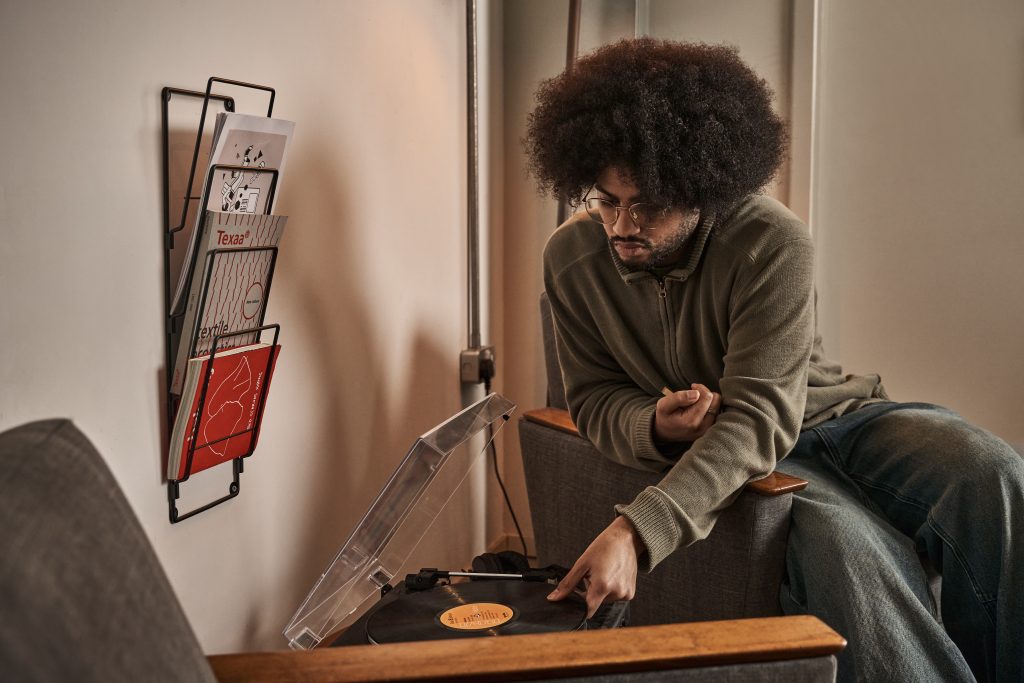
What Independent Artists Need From a Studio in 2026:
Recording, Releasing and Everything in Between
We started Ten87 Studios in 2014 because we believed independent artists deserved better than the options available to them. Not a better hourly rate. A better environment, one built around the reality of how careers in music actually develop, rather than a transaction model that treats every booking as a one-off.
Eleven years later, we have over 60 professional studios across Tottenham, a community of more than 150 artists and producers working here every day, and a clearer picture than ever of what independent artists actually need when they’re planning a release in 2026. This is that picture.
The quality bar has moved, and it starts before you arrive
The most common mistake we see independent artists make is arriving at a session expecting the studio to fix problems that were present before they walked in. By the time you’re recording, the decisions that will most affect your release have already been made: arrangement, tempo, key, whether the track is built to record live or layered in production.
We’re not saying this to put pressure on anyone. We’re saying it because we’ve seen the difference between artists who arrive prepared and artists who arrive hoping the environment will compensate for incomplete pre-production. It doesn’t. What our studios can do is make everything you bring in sound exactly as good as it can, which is a meaningful thing, but it isn’t magic.
What you get from recording at Ten87 Studios specifically:
None of this replaces the song. But it means the song gets the best possible chance.
Where most independent releases actually lose ground
We hear a lot of conversations about recording. We don’t hear enough about what happens after.
Mixing and mastering are where the gap between a professional release and a home production is most audible, and they’re where the independent artists in our community have consistently told us they needed the most support. Which is why we built our mixing and mastering service in-house.
Mixing is the difference between a session that sounded great in the room and a release that sounds great everywhere. Levels, EQ, dynamics, spatial placement, done well, it’s invisible. Done poorly, it’s the reason a recording feels cluttered on a proper speaker system even though it sounded fine in headphones.
Mastering is the final stage before your distributor. In practical terms for a 2026 release, it means your track needs to be optimised for the loudness targets of each major platform: Spotify normalises to around -14 LUFS, Apple Music to -16 LUFS, while preserving the energy and character of the mix. Automated platforms like LANDR have improved, and we don’t dismiss them for rough references. For a release you’re putting out commercially, they’re optimising toward an average. Our engineers are optimising toward your track specifically.
If you’ve recorded with us, the path from session to release is seamless. If you’ve recorded elsewhere and want professional mixing or mastering to finish the project, we can work from your stems or your finished mix. Find out more about our services here.
Content is part of every release – and our building reflects that
Releasing music in 2026 means releasing content alongside it. Behind-the-scenes footage, studio clips, reels, live session videos, photography, the audience that streams your release is built by the content that surrounds it, not just by the track itself.
We designed Ten87 Studios with this in mind. Our building isn’t purely functional; it’s a visually considered space that works for content creation as well as for recording. Artists who work here regularly use sessions as opportunities to capture material they couldn’t produce in a home environment: proper lighting, interesting visual spaces, a professional setting that reads as legitimate to a 2026 audience.
You don’t need to plan a separate shoot. The environment is already there.
The introductions you can’t plan for
Some of the strongest releases that have come out of Ten87 Studios over the years started as unplanned conversations. A producer who overheard a session and offered a perspective that changed the direction of a track. An artist who came in for a day hire and ended up collaborating on an EP. An engineer who was asked a quick question in the corridor and became a long-term working partner.
We can’t promise these introductions; nobody can. But we can tell you that they happen consistently in an environment where 150 artists and producers are working in the same building every day, and they almost never happen when you’re recording alone.
The community at Ten87 Studios isn’t a marketing concept. It’s the reason a significant number of our members have been here for years rather than months.
What you need at each stage – and what we offer at each one
Independent releases don’t need everything at once. Here’s how we map to the actual stages of a release project.
Pre-production and writing. Flexible day hire at The Club or Studio B, full days or multi-day blocks without hourly pressure. Room for collaborators. A space that’s set up and working when you arrive.
Recording. Acoustically treated rooms, the right microphone for the source, a signal chain that captures cleanly. Our Studio B is fully self-operated with a detailed guide; The Club suits larger sessions and live tracking. Both are in the same building as 60+ studios of working musicians who are part of the same community.
Mixing and mastering. Handled in-house by our engineering team. If you’ve recorded with us, this is a continuation of the same project. If you’re bringing work from elsewhere, we work from your stems or mix. See what’s included in our services.
Post-release. Somewhere to record live sessions, shoot content and develop the next project without starting the studio search again. Our long-term hire options are for artists who want a permanent creative base, and the community infrastructure that comes with it.
Funding your release: what you might be entitled to
Studio hire, mixing, mastering and release promotion costs are eligible expenses under several UK music funding schemes we know well.
Help Musicians’ Record and Release fund offers grants of up to £3,000 for independent artists — specifically covering studio hire and mastering among other costs. It’s a rolling fund with no fixed deadline. The government’s new Music Growth Package, announced in July 2026, also includes direct grants of £10,000–£20,000 for artists and producers through the Music Creators Growth Fund, with full guidance due in September.
A confirmed studio quote from a named professional space strengthens a funding application considerably. If you’re planning to apply and want to use Ten87 Studios in your budget, we can provide the documentation you need.
Read our complete guide to UK music grants in 2026 before you apply; it covers every major scheme currently open and what each one is looking for.
A note on how we think about independent artists
We’re publicly funded. That’s worth saying plainly, because it shapes how we operate. We don’t exist to maximise revenue from bookings; we exist to create long-term environments where independent artists can build sustainable careers. That’s been the mission since 2014, and it’s still what drives every decision we make about the space, the community and the services we offer.
Independent artists who work here aren’t customers in the transactional sense. They’re part of what we’ve built. The community works because everyone in the building is invested in making it work, not just using the facilities and leaving.
Talk to us
If you’re planning an independent music release in London in 2026 and want to understand what Ten87 Studios can offer, whether that’s a single day hire session, professional mixing and mastering, or a longer-term arrangement, get in touch directly.
Or explore what’s available: our services, day hire at The Club and Studio B, and long-term studio hire.
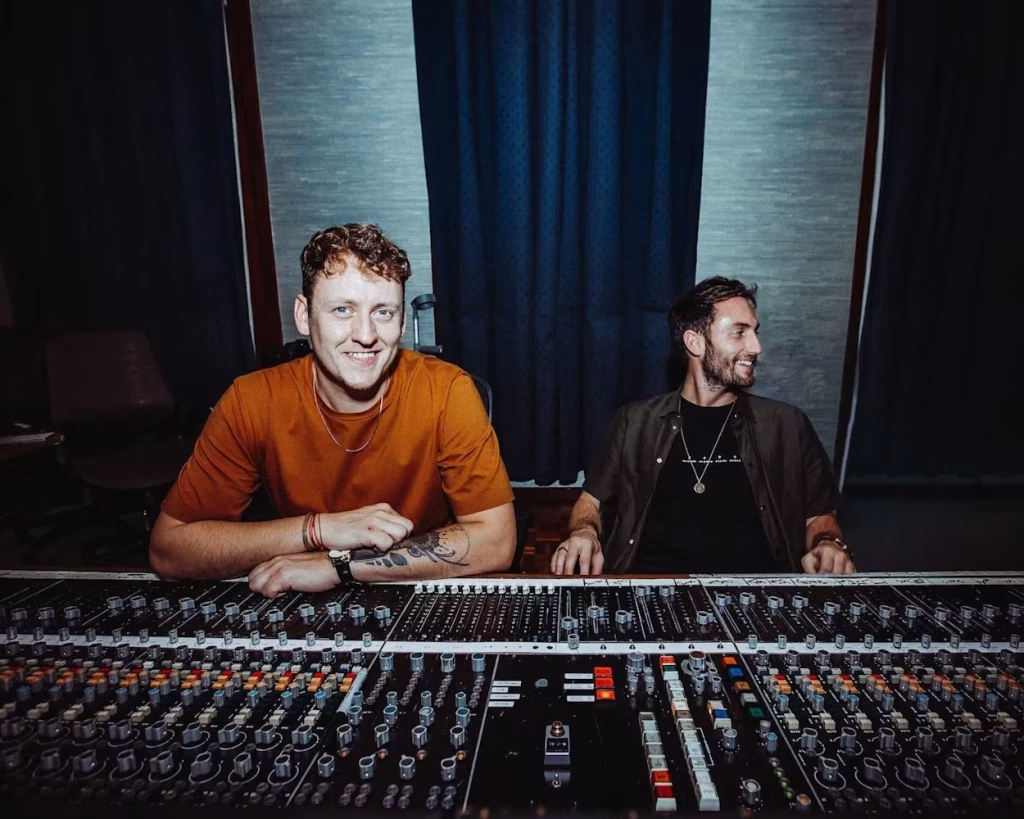
How to Run a Writing Camp in London: The Producer’s Guide to Intensive Studio Sessions
You have a producer, two songwriters, a vocalist and an artist with studio time blocked out. The question isn’t whether the ideas are there; it’s whether the environment is going to let them happen.
A writing camp is only as good as the space it runs in. The right London recording studio gives a multi-person session room to breathe: separate spaces for simultaneous work, communal areas where ideas spill between sessions, and equipment that doesn’t slow anyone down. The wrong one turns a creative opportunity into a logistical headache before lunch.
At Ten87 Studios, a community of over 60 professional studios in Tottenham, north London, writing camps are one of the most productive uses of our day hire spaces. This is the practical guide to planning one that actually delivers.
Why writing camps outperform isolated sessions
The economics of creativity favour concentration. When the same people work in the same space over consecutive days, the ideas compound. A melody that didn’t land on day one gets picked up again on day two by someone who heard it differently. A collaboration that starts between sessions in a corridor turns into the strongest track of the camp.
Individual studio sessions rarely produce this kind of momentum. When everyone leaves at the end of a booking and reconvenes a week later, the thread drops. Writing camps keep it alive.
The practical advantages are significant:
Many of the most durable creative relationships in UK music started during a writing camp. The shared intensity of a few focused days creates the kind of professional bond that takes months of separate sessions to build otherwise.
Choosing the right recording studio space in London
The environment has a direct effect on output. A cramped, poorly equipped room with thin walls between bookings creates friction at every stage. A well-designed professional space removes those obstacles and lets the work happen.
For a writing camp specifically, look for:
Multiple rooms that can run simultaneously. If your producer and your topline writer need to work in different directions at the same time, you need two usable spaces, not a waiting list. Camps that try to run everything through a single room stall constantly.
Genuine acoustic treatment. Decisions made on bad monitors in an untreated room create problems at mix stage. Professional rooms let everyone hear clearly, which speeds up decisions and produces better results.
Communal areas that aren’t an afterthought. The hallway conversation, the kitchen idea, the session that starts because two people happened to be in the same room, these are where writing camps produce their best surprises. A space that pushes everyone back to separate rooms the moment a session ends shuts this down.
Equipment that doesn’t require a technical degree. Every hour spent troubleshooting a patchbay or chasing a ground loop is an hour not writing. Professional day hire studios come with functioning signal chains and support.
Flexible booking. Creativity doesn’t always run to a two-hour slot. Camps need full-day or multi-day blocks where the team can work until the idea is finished, not until time runs out.
The Club and Studio B at Ten87 Studios
For writing camps in London, Ten87 Studios’ two-day hire spaces cover different needs.
The Club is a large-format live recording and production space built for sessions that need room, bands, full-group tracking, larger production setups, or camps where multiple people are working the same session simultaneously. It’s the right space for a camp with five or more participants, or for any session where the energy of the room matters as much as the technical setup.
Studio B is a production and recording suite with a comprehensive outboard rack, suited to smaller camps: a producer, a writer and an artist working through a focused set of tracks. Self-operated with a detailed setup guide, it gives a small team everything needed without the overhead of a larger room.
Both spaces are embedded in Ten87 Studios’ working community, which means the sixty-plus studios around them are active on any given day, and the people working in them are available for the kind of informal introduction that often produces the most interesting collaborations.
Planning your writing camp: the practical framework
Preparation is what separates a productive camp from three days of expensive confusion. The creative energy should go into the music, not the logistics.
Before anyone arrives, establish:
The purpose of the camp. Are you developing an album, building a sync catalogue, writing for a specific artist, or exploring new creative directions? A clear objective helps everyone arrive with the right mindset and gives the sessions a shape.
A realistic song target. Two to four completed or near-completed tracks is a reasonable outcome for a two-day camp. Setting a target creates focus without pressure.
Session schedules. Block the days into morning and afternoon sessions with breaks built in. Ear fatigue is real, a thirty-minute break mid-afternoon returns everyone to a session sharper than they left it. Build the schedule before the camp, not on the fly.
Studio allocation. If you’re running two rooms simultaneously, decide in advance which team is in which room and what each is working on. This avoids the paralysis of everyone waiting for someone else to decide.
Technical requirements. What DAWs are people bringing? What plugins does the studio have installed versus what needs to come on a drive? Resolve this before day one.
File management. Agree on a shared folder structure at the start. Camps that leave file organisation until the end often lose a day sorting through unnamed stems and duplicate sessions.
Catering. A camp where people have to leave the building for lunch loses momentum every time. Arrange delivery or bring provisions.
Assembling the right team
The strongest writing camps aren’t built around the biggest names; they’re built around the right combination of complementary skills.
A well-balanced camp typically includes:
Not every camp needs all of these. A three-person camp with a producer, a writer and an artist can be enormously productive if the chemistry is right. What matters is that every person in the room is adding something the others can’t, and that nobody is there to observe.
New faces often produce the most interesting results. Inviting one or two collaborators who haven’t worked with the core group before introduces creative friction that pushes everyone beyond their usual patterns.
The business side: agreements before anyone hits record
Writing camps generate intellectual property from the first session. Leaving the business conversation until after the music is made is one of the most common and costly mistakes in independent music.
Before recording begins, agree on:
Song splits. Who wrote what, and in what proportion? This is easier to agree in the room than over email three months later when a track gets placed.
Publishing arrangements. If anyone is signed to a publisher, their existing deal may affect how splits are structured. Know this in advance.
Producer agreements. Is the producer working for a fee, a points deal, or a split? Be explicit.
Master ownership. Who owns the recordings coming out of the camp?
Session credits. How will contributors be credited on any release?
Release intentions. Is the material being made for a specific artist, pitched to labels, or held for sync? This affects how the splits are structured and what rights need to be cleared.
These conversations are easier when everyone is in the same room and the music is still fresh. Make them part of day one, not an afterthought.
Why a studio community changes what’s possible
A traditional hourly recording studio is a transaction. You book, you record, you leave. The building empties and resets for the next client.
A studio community works differently. At Ten87 Studios, the sixty-plus rooms around any given session are occupied by working musicians, producers, engineers and music businesses on any given day. The community is active, not static.
This matters for writing camps because some of the most valuable outcomes aren’t planned. The artist two studios along who happens to be exactly right for the hook you’ve been trying to place. The mix engineer who overhears a session and offers exactly the right note. The producer whose setup is perfect for the track that’s taken an unexpected direction.
These introductions don’t happen in isolation. They happen in a building where people are present, working and available, which is what Ten87 Studios is designed to be.
Long after the writing camp ends, the relationships made during it continue. Many of the collaborations that started in our building during a camp have produced releases, long-term partnerships and creative projects that are still active years later.
Before you book: a note on funding
Writing camp costs – studio hire, producer fees, engineer costs – are eligible expenses under several UK music funding schemes, including Help Musicians’ Record and Release fund (up to £3,000) and Arts Council England’s National Lottery Project Grants.
If you’re planning a camp and budget is a consideration, it’s worth reading our complete guide to UK music grants in 2026 before you book. A confirmed studio quote from a named professional space strengthens a funding application considerably.
Book your writing camp at Ten87 Studios
If you’re planning a writing camp in London and want a professional recording environment with the space, equipment and community to make it work, Ten87 Studios has two day hire options designed for exactly this kind of session.
The Club is the right space for larger camps, full-group sessions and any situation where the energy of the room is part of the work.
Studio B suits smaller, focused camps where a tight creative team needs a fully equipped production room and the freedom to work without interruption.
For multi-day bookings or to talk through what would work best for your project, get in touch directly. We can advise on room setup, scheduling and how to make the most of the community around you while you’re here.