





Booking a professional recording studio for the first time feels bigger than it should. There’s an idea that you need to know everything before you arrive, that walking in underprepared will somehow expose you as someone who doesn’t belong there.
That’s not how it works. But going in with a clear sense of what to expect, what to prepare, and how to make the most of your time will make a real difference to what you walk out with.
Here’s what you actually need to know.
Day hire studios vary considerably. The most important distinction is between a room that’s an acoustically treated recording space with professional signal chain and one that’s essentially a production suite with good monitors. Both are useful but for different things.
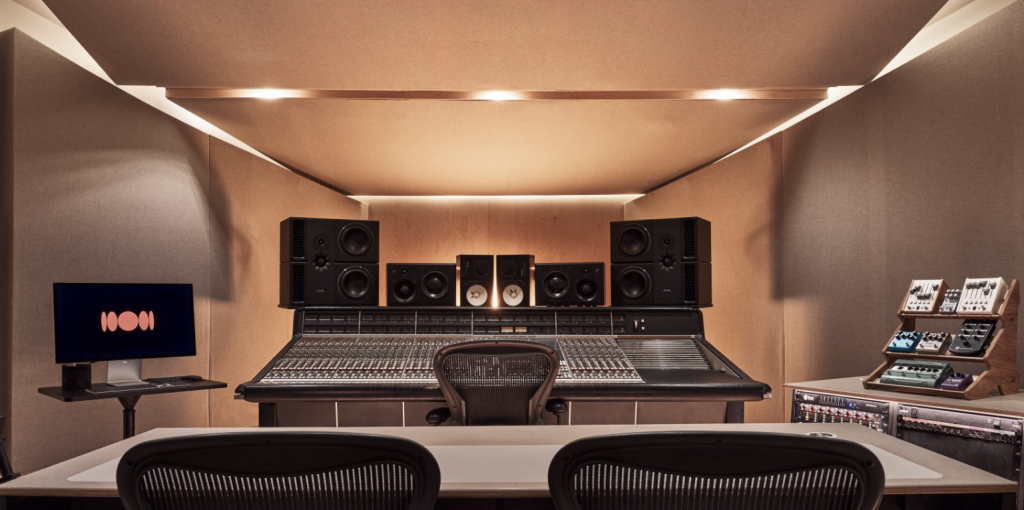
At Ten87 Studios – a community of over 60 professional studios in Tottenham, north London – our day hire options are The Club and Studio B. The Club is a large-format live recording space built for bands, vocalists, and sessions that need room. Studio B is a production and recording suite with a comprehensive outboard rack, suited to producers, beatmakers, and artists working in more self-contained setups. Knowing which space you’re in before you arrive shapes how you prepare.
When comparing studios, look specifically at:
Have your session file organised. If you’re bringing a project from home – Ableton, Logic, Pro Tools, whatever your DAW – export stems of everything. Bounce all your tracks individually, properly labelled, at the same sample rate and bit depth. Keep the original project file too. Nothing wastes session time faster than untangling an unfamiliar project on someone else’s hardware.
Know your key sounds and patches. If you’re using specific software synths or plugins, either install them on the studio machine beforehand (check what the studio has installed and what you’d need to bring on a drive) or export frozen/rendered versions of those tracks. Don’t arrive expecting the studio to have your preferred version of every plugin.
Prepare a simple brief. This is more useful than it sounds. Write down – even just for yourself – what you want to walk out with. Three finished vocal takes? A rough mix of four tracks? A fully produced instrumental? Being clear about the goal before you arrive stops you from drifting mid-session. If you’re working with an engineer, a brief lets them support you properly.
Do a gear check the night before. If you’re bringing hardware – a synth, a guitar, pedals, an audio interface as a backup – test it the night before. Check your cables. Bring spares. The session is not the moment to discover something isn’t working.
Day hire typically runs in blocks – half-day or full day. Here’s what makes the difference between a session that delivers and one that runs out of time before it gets anywhere useful.
Start with a quick sound check, not a full take. The first thing you should do in any unfamiliar room is listen. Play something you know well through the monitors. Record a short test take if you’re going to be recording. You’re calibrating your ears to the room, not committing to anything yet.
Work in order of importance. Whatever absolutely has to come out of the session – do that first, while your energy and focus are fresh. Save the nice-to-haves for the end. Sessions almost always compress toward the finish; you want what matters done before that happens.
Don’t overthink the environment. The room, the equipment, the professional setting – these are working for you, not against you. Some first-timers get self-conscious and perform worse than they would at home. The room is acoustically designed to make you sound good. Trust that and work.
Take a break. Ear fatigue is real. If you’re mixing or monitoring for more than 90 minutes without a break, your judgement starts to go. Step out, get a coffee, come back to it. A ten-minute break returns you to a session sharper than you left it.
Before you leave, make sure you have:
If you’re heading to mixing and mastering after, export stems organised clearly by instrument group. The engineer you work with will thank you for it and you’ll get better results.
Both our day hire spaces – The Club and Studio B – come with access to professional-grade monitoring and a comprehensive gear setup. Studio B is fully self-operated with a detailed guide available, and both spaces are part of a working studio community rather than an anonymous booking facility.
If it’s your first session and you’d like to talk through what would work best for your project before booking, get in touch with us directly. Otherwise you can review what’s available and check dates on the day hire pages.
The first professional session is the one that shows you what’s possible. The ones after that get easier.